
How Broken Bones Heal—and What You Can Do to Support Recovery
In the United States, approximately 5–10% of bone fractures experience delayed healing or non-union, meaning the bone does not heal as expected. While some factors affecting bone healing are outside your control, many can be influenced with the right orthopedic care, nutrition, and rehabilitation plan.
At Direct Orthopedic Care, our orthopedic specialists help patients optimize fracture healing and reduce the risk of complications—so they can safely return to daily activities, work, and sports.
Risk Factors That Can Slow Bone Healing
Several factors can interfere with the body’s ability to heal a fracture, including:
-
Aging
-
Medical conditions such as osteoporosis
-
Tobacco or excessive alcohol use
-
Poor or deficient nutrition
-
Severity and location of the fracture
Some of these risk factors are unavoidable, but others—such as nutrition, activity level, and smoking—can be addressed to improve healing outcomes.
The Five Stages of Bone Healing After a Fracture
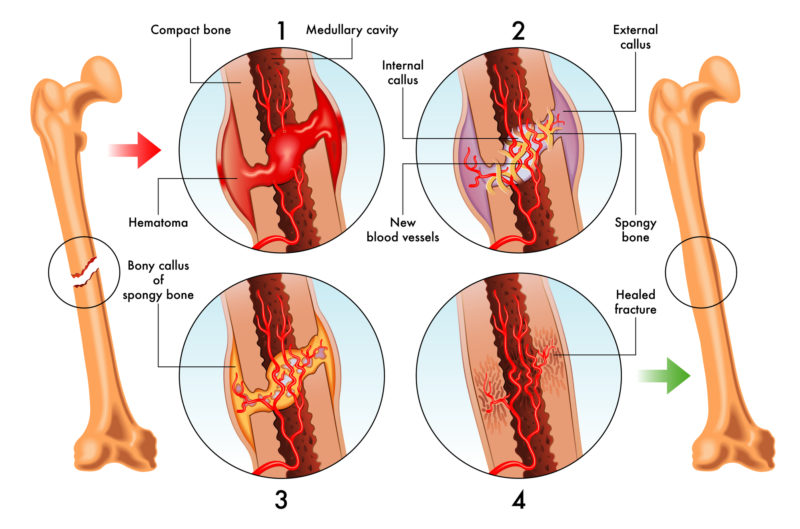
Bone healing is a complex, multi-stage process that occurs over weeks to months:
-
Hematoma formation: Immediately after the fracture, blood collects around the broken bone ends and begins to clot.
-
Inflammation: Within 24 hours, inflammation peaks at the fracture site, triggering tissue repair and early callus formation.
-
Soft callus formation: Over the first two weeks, a soft, cartilaginous callus forms, stabilizing the fracture as blood vessels grow into the area.
-
Hard callus formation: The soft callus is replaced by woven bone, which is stronger and more rigid.
-
Bone remodeling: As early as 3–4 weeks, woven bone is gradually remodeled into lamellar bone—normal, strong bone. This final stage can take months or even years to fully complete.
How to Support and Speed Up Bone Healing
While bones heal on their own, orthopedic care and healthy habits can significantly improve healing quality and speed.
Advanced Orthopedic Treatment Options
-
Regenerative medicine therapies: Stem cells and growth factors derived from your own bone marrow may help promote bone regeneration in certain cases.
-
Bone grafting: When bone loss is present, grafting can provide a scaffold for new bone growth using donor bone or your own bone tissue.
Nutrition for Bone Healing
-
Protein: About half of bone volume is protein. Research suggests consuming 1–1.5 grams of protein per kilogram of body weight per day during healing.
-
Vitamin C: Essential for collagen production, a key structural component of bone. Found in citrus fruits, broccoli, papaya, and supplements if needed.
-
Nutrient-dense calories: Focus on whole foods instead of processed or refined foods to support tissue repair.
Pain Management and Medication Considerations
-
NSAIDs (nonsteroidal anti-inflammatory drugs) may delay bone healing by interfering with bone remodeling.
-
If pain relief is needed, acetaminophen (Tylenol) is often recommended instead—always under medical guidance.
Physical Therapy and Blood Flow
-
Proper blood flow is critical for bone healing.
-
Guided exercise and physical therapy can promote circulation, maintain strength, and restore range of motion without stressing the fracture.
-
A DOC physical therapist can design a safe, personalized rehab plan to support healing at every stage.
Expert Fracture Care at Direct Orthopedic Care
Broken bones require more than rest—they require expert evaluation, treatment, and follow-up. At Direct Orthopedic Care, our orthopedic surgeons, physician assistants, physical therapists, and pain management specialists work together to support optimal bone healing from start to finish.
Get the Right Care for Your Fracture Recovery
If you’ve suffered a fracture or are concerned about delayed bone healing, the DOC team is here to help. From advanced treatment options to personalized rehabilitation plans, we focus on helping your bones heal strong and properly. Find a Direct Orthopedic Care location near you and take the next step toward a safe, complete recovery.